
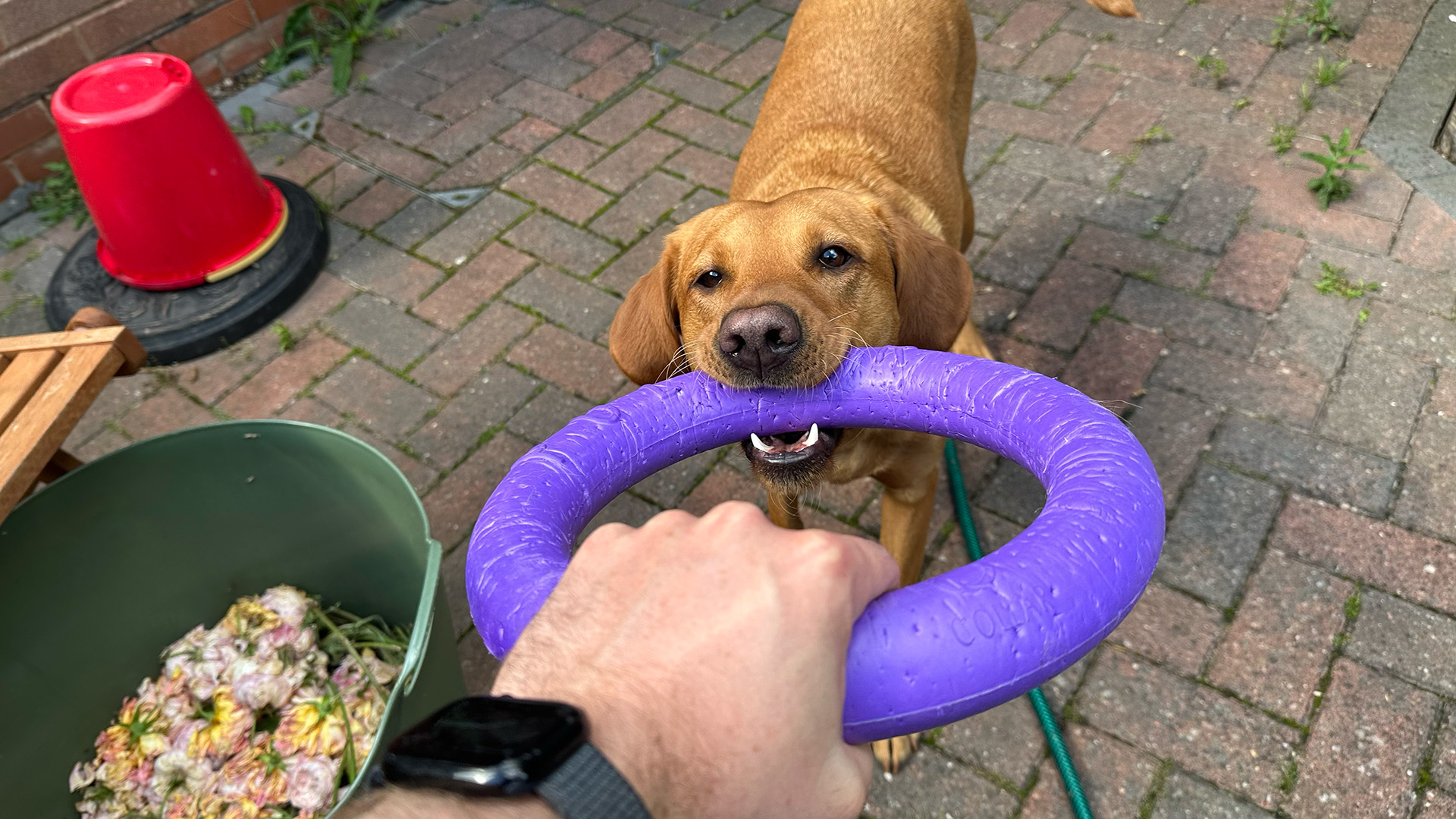
Play is one of those things that is massively underrated. There are schools of thought that tell you playing with your dog will teach them behaviours you don’t like. This is not only untrue, but it’s the absolute opposite of the truth. Play is the perfect opportunity to give our dogs healthy outlets for their breed-specific needs, create rules around how and when they can display these behaviours, and when they need to stop.
It’s also the perfect opportunity to practice communication with our dogs during high arousal. If you’ve ever found that your dog listens to you when they’re calm but not when they’re excited, play can be the perfect opportunity to bridge that communication gap.
There’s a catch, though – there must be rules!
We want play to be interactive with us, for lots of reasons. Repetitive ball throwing causes more problems than it solves, but when it comes to building a relationship through play, it’s particularly ineffective.
Playing tug with our dogs is great. We want to be particularly careful with puppies that we’re using soft toys for this, that we’re not pulling, and we’re just holding the toy still, and letting them pull. For older dogs, we can be more interactive.
The most important rule is that we move side to side, and never up and down. We want to avoid upward pressure on the dog’s neck at awkward angles.
When starting with play, we want to encourage engagement first and add control as engagement increases.
A great way to do this is to start with two identical toys. We make one toy come alive and play play play, then we make that toy go dead and make the second toy come alive. Once we’ve got into a good rhythm, we can start to add a ‘give’ or ‘out’ command and start to teach our dogs that dropping the toy is what restarts the game with the other toy.
Sometimes we win the game, sometimes the dog wins the game – this is really important. There’s this weird idea that the dog will think they’re the boss if they win, but this isn’t how it works. This is a playful contest. If we win all the time, it’s no fun for the dog, and if they win all the time, it’s too easy and again, the fun and engagement will decrease.
The other thing to know about tuggy play is that there are essentially 5 different dynamics
- We play with the toy together
- The dog has the toy, and we chase them
- We have the toy, and the dog chases us
- The dog has the toy, and they chase us
- We have the toy, and we chase the dog with the toy
The ones that create the best games are 1.3 and 4. As soon as your dog wins (or you let them win), run off in the other direction so that they chase you with the toy for the game to start again. The same goes if you win, run away from them, showing just how excited you are that you got the toy from them, and then start the game again.
As always, and especially with this one, have fun with it. Be engaged and be engaging. Don’t just go through the motions; give your dog a contest and watch how quickly your relationship flourishes.
Try to make play part of your everyday routine, and you’ll build massive value in your relationship as well as the toys you play with.
A useful thing to note is that toys only come out when we’re playing. Dogs don’t need lots of toys hanging around the house, and if anything, it tends to keep them in a constant state of ‘busyness’ rather than just giving them the chance to chill out.