
We’ve talked about boundaries in other blogs. But in case you’ve missed the others (how dare you), a little refresher:
This is not about ‘being the alpha’. It’s not about ‘showing your dog who’s boss’. It’s about setting consistent structures. Being the person in the house who decides what resources of value are available to whom. It’s about helping your dog to regulate, and it’s about creating a healthy, fair relationship between you and your dog.
This is true for all dogs, but for dogs you want to take hiking or camping. This becomes critical and core obedience. Want your dog to settle in the cafe at the end of a hike? Set boundaries at home. Want your dog to sit still while you put a tent up? Set boundaries and home. Want your dog to come back when you call them away from something dangerous, disgusting, or delicious? Set boundaries at home.
Setting a boundary that your dog isn’t allowed upstairs is a very healthy boundary to set for several reasons.
It’s a great opportunity to create a space where you aren’t with your dog all the time. If you missed the email about having time apart from your dog, this is really important. Things like separation anxiety are particularly prevalent in dogs that are allowed to follow you upstairs, and particularly when it comes to dogs that are allowed to sleep in our beds or bedrooms with us.
We’re going to take a simple approach to this one. It’s one we can practice at first if we have a dog that already tends to trot up the stairs on its own, rather than spending our whole lives chasing them up the stairs. We’re just going to spend a little bit of time practising this each day, and when we’re not practising, we’re going to shut off access to the stairs with a baby gate or just contain the dog with interior doors in the house.
To practice this…
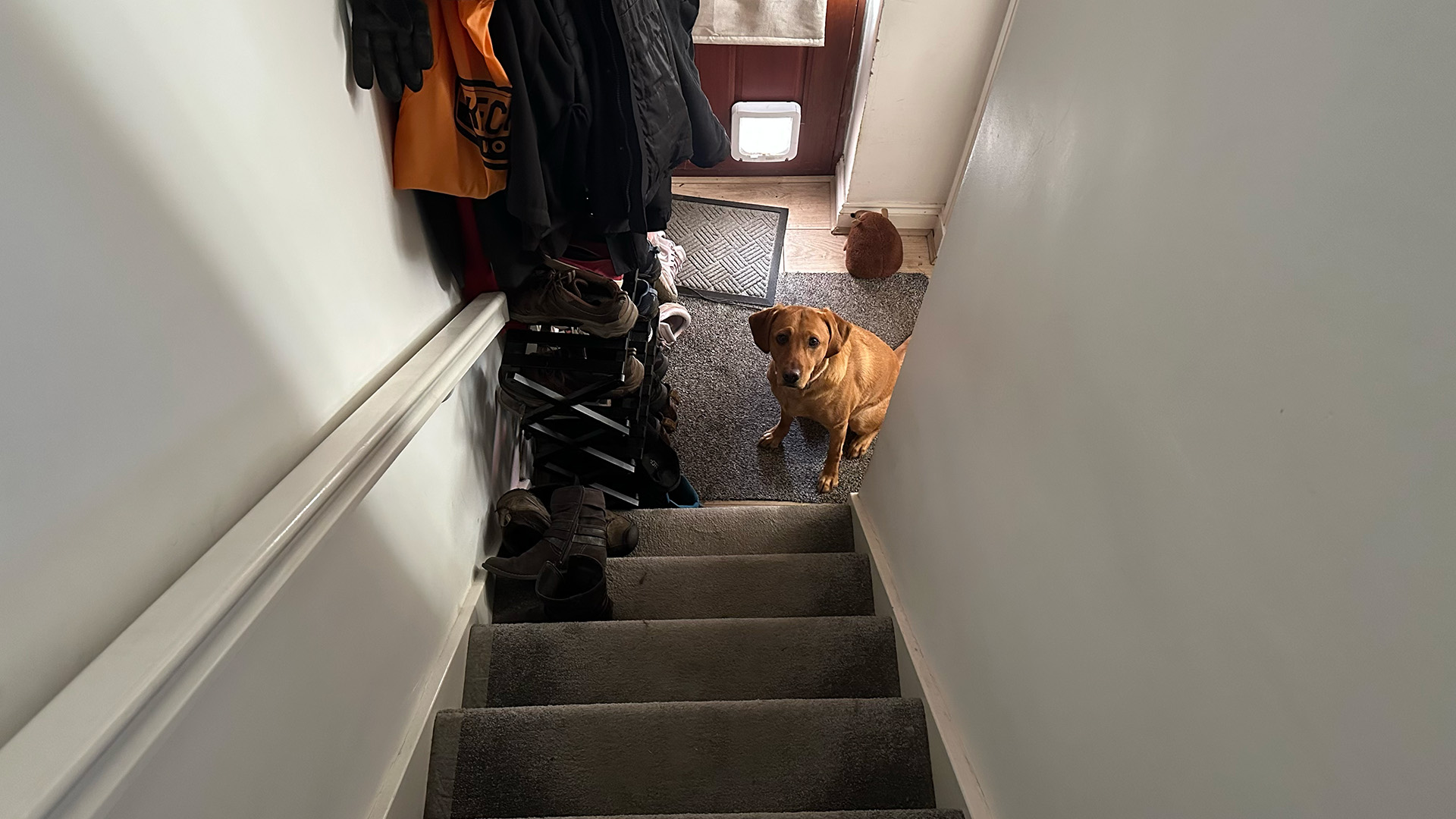
Goal: We can walk up the stairs without the dog following us.
Set up:
You’re going to need a dog… and some stairs
Exercise:
- With the dog behind you, start to take a few steps up the stairs
- If the dog puts even one paw on the bottom step, we’re going to say ‘off’ and use our body to take up space and guide the dog back off the steps
- We’re going to repeat until we can get all the way up the stairs without the dog following us
A note on using treats: We can use treats to reward the dog for staying at the bottom of the stairs, but I would advise against doing this for very long. Ideally, we want the dog to go and chill out somewhere else, rather than waiting in anticipation for us to come back down with treats. So if you do start off using treats, fade these out quite quickly.
As with everything, consistency is key – don’t expect your dog to learn it straight away and for it to stick, especially if they have been allowed to trot upstairs for quite some time. Also, if your dog is suffering with seperation anxiety already – don’t dive into this exercise just yet – give me a shout, and we can put a proper plan in place.